
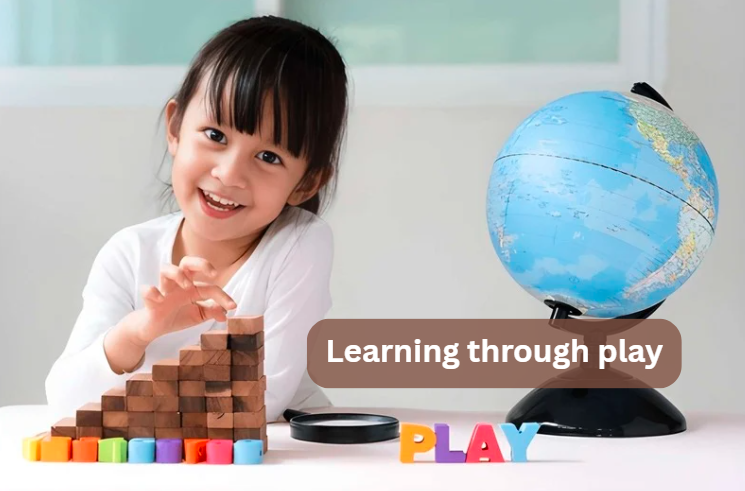
Nobody told you when you became a parent that half of your child’s most important learning would happen on the living room floor with a pile of blocks and a toy truck. However, that is essentially how things work.
Kids are not sitting around waiting to be taught. They are already learning through everything they touch, try, and mess up. Learning through play is not a trendy theory. It has been studied for decades, and the research keeps saying the same thing: children learn best when they are playing.
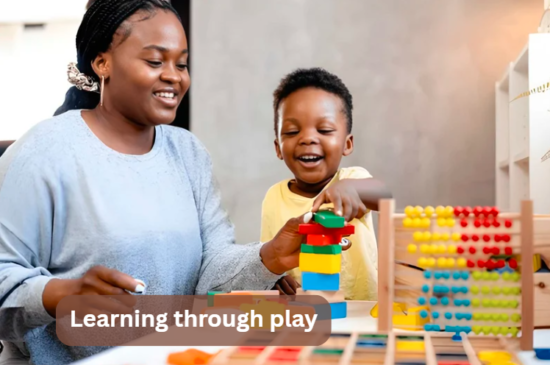
What most guides skip is that learning through play does not look the same at every age. This guide covers the three stages where it has the biggest impact and what you can do to support each one.
What Learning through Play Actually Means
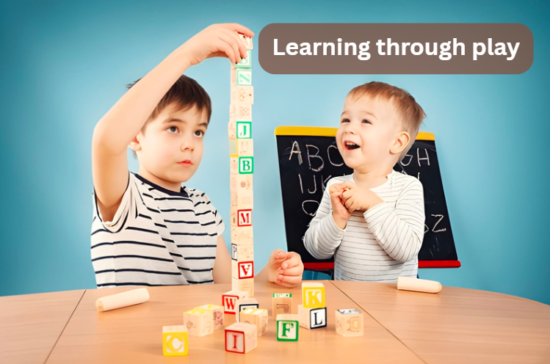
A lot of parents hear “learning through play” and picture a classroom with paint stations and dress-up corners. But the real idea is broader.
Learning through play means children are not passive. They choose what to explore, set the rules, and decide when something is not working. That process, repeated hundreds of times a day, is how children build language, problem-solving ability, and confidence.
This has long been stated by the American Academy of Pediatrics. Play is not a diversion from growth.It is how development happens. When a toddler figures out the big block will not balance on the small one, that is physics. When a preschooler talks through a pretend scenario with a friend, that is social negotiation.It doesn’t look like school at all. All of it is learning.
Stage 1: Learning through Play from Birth to Age 3
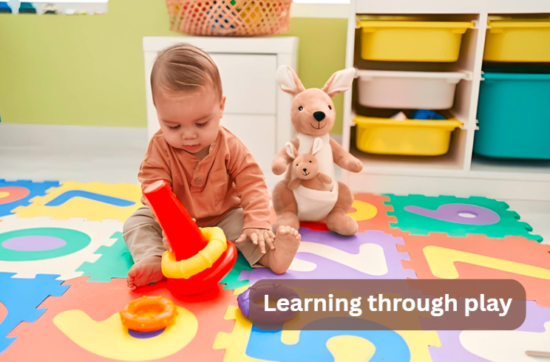
This first stage is where everything starts, and parents often underestimate how much is happening.
In the first few months, a baby kicking their legs and tracking a face is already playing.Their brain is mapping the functions of their body and the reasons of many events. By toddlerhood, play gets louder and messier. They stack things to knock them down. They hand you an object and wait to see what you do. Each of these is a small experiment in cause and effect.
This is the stage where interactive games for children have a real payoff. Peekaboo, rolling a ball back and forth, singing the same silly song over and over these build language and the early social instincts children carry into preschool. Toddlers who get consistent interactive play with a caregiver develop vocabulary faster and handle big emotions better by age four.
You do not need to spend money here. A cardboard box and ten minutes of your full attention will do more for your one-year-old than most things you can buy.
Stage 2: The Preschool Years and How Play Shapes Early Development
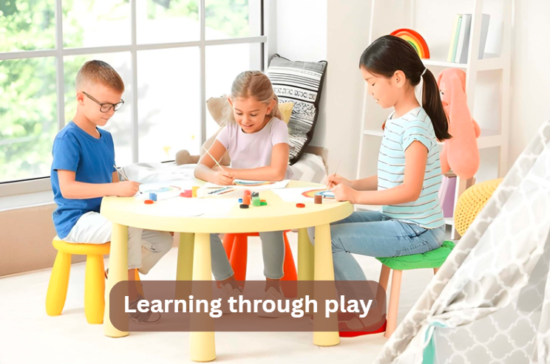
Ages three to six are when playful learning becomes the most visible and the most fun to watch.
This is when kids shift from playing near each other to actually playing with each other. They assign roles. They argue about rules they just made up. They negotiate who gets to be the doctor. All of that back-and-forth is doing serious developmental work.
Researchers call this progression from parallel play to associative play to cooperative play. Each step builds social awareness, communication, and the ability to handle things not going their way.
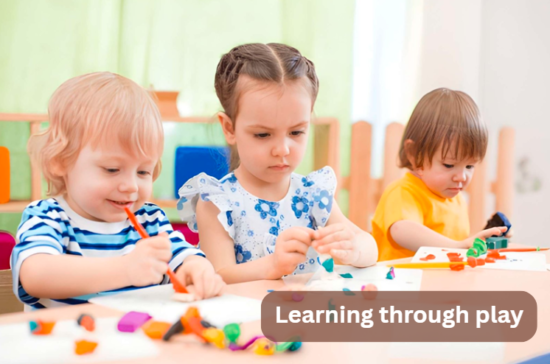
DIY kids activities fit well at this stage because children this age want to make things. Give a four-year-old tape, paper tubes, and some stickers and they will spend forty minutes building something they are proud of. In that time they practiced planning, fine motor skills, and creative problem-solving.
Research from Frontiers in Education found that children in play-based preschool programs enter kindergarten with better language skills and stronger attention than children in formally structured programs. Screen time does not substitute for this. The AAP is clear that interactive physical play with real objects develops skills that passive viewing does not.
Stage 3: Middle Childhood and the Power of Play in School-Age Kids
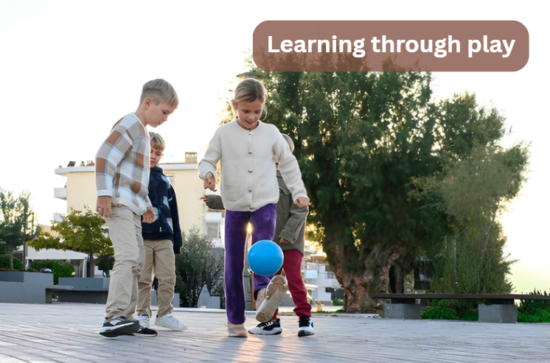
By age six or seven, a lot of parents start to feel like play should step aside and real learning should take over. Homework, reading practice, structured activities. It makes sense from the outside. But it misses something important.
Playful exploration does not stop being valuable just because a child starts school. It shifts. Play at this age looks more like organized games, building projects, sports, and creative crafts. The rules are more fixed. The goals are clearer. But the developmental value is just as real.
Outdoor play ideas matter especially at this stage. The CDC has reported that children who get regular physical activity, including unstructured outdoor time, perform better academically and show fewer behavioral issues at school. Recess is not a reward for finishing work. It is part of how a child’s brain processes and consolidates what it has been learning all morning.
At this age, kids are also figuring out where they fit socially. Group play, team games, and collaborative projects are how they practice navigating friendships, handling disagreements, and bouncing back when things do not go their way. You cannot teach resilience with a worksheet. It gets built through experience, and play is where that experience happens.
For families trying to find activities that fit this stage, parenting giveaways and resource guides from trusted family platforms are worth exploring. The best ones point you toward ideas that actually hold a child’s interest rather than activities they abandon in five minutes.
How to Support Your Child’s Play Without Getting in the Way
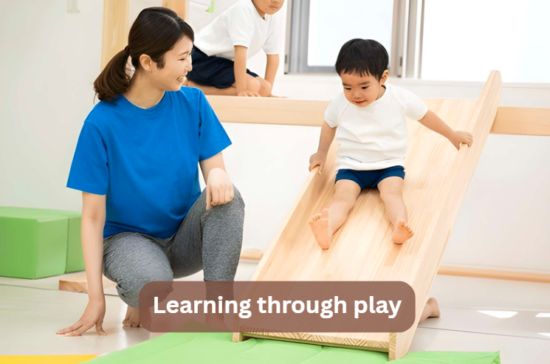
The biggest mistake parents make is managing play too tightly. Once you start assigning goals to every activity, kids feel the shift. The thing that made play motivating, the freedom to follow their own ideas, disappears, and suddenly it is just another task.
Your job is to set the stage and get out of the way. Put interesting materials somewhere accessible. Take them somewhere new. Give them time that is not scheduled. When they ask you to play, say yes and let them be in charge.
Resources like the lwmfmaps map guide by lookwhatmomfound can help you find local parks, nature trails, and outdoor spaces worth exploring together. New environments are some of the best triggers for the kind of open, curious play that actually develops something.
When your child hands you a toy and tells you what role to play, take it seriously. That experience of having a grown-up follow their lead does more for a child’s confidence than most things you could plan.
What Play Builds in Your Child Beyond Report Cards
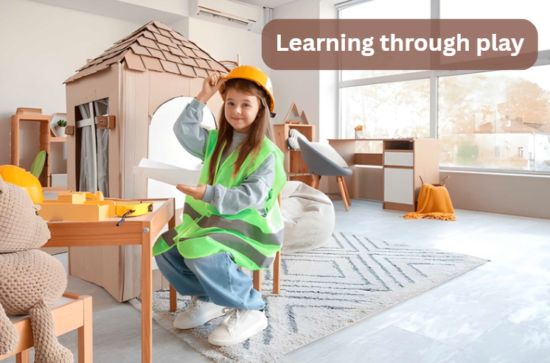
Most guides about child-led play list the measurable outcomes. Vocabulary size. School readiness. Motor milestones. Those things matter.
But play also builds something harder to measure. A child who had plenty of free play time grows up trusting their own ideas, unafraid to try things they might get wrong, and knowing how to work with other people. Those qualities come from years of leading their own exploration, not from structured activities however well-intentioned.
For practical seasonal project ideas that support this, activities brought to you by lookwhatmomfound lwmfcrafts offer low-cost ideas that fit into real family life without a lot of setup.
Final Thoughts
The three stages here are not strict cutoffs. They overlap. A seven-year-old still benefits from the same open-ended exploration that mattered at three. A toddler is already developing the early version of the social skills that will matter at six.
What stays true across all three is this.play-based learning works because children are engaged, curious, and in charge of what they are doing. Protect that. Give them time that is not scheduled, space that is not controlled, and materials that invite curiosity. The learning takes care of itself.