
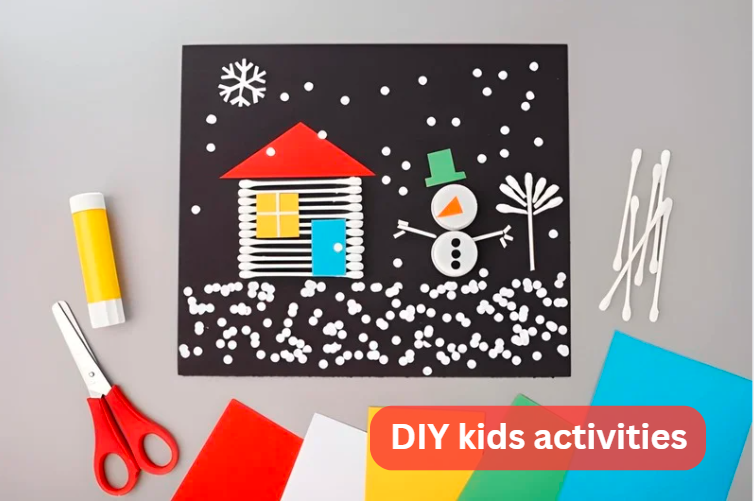
Most parents run into the same situation at home.Children quickly become disinterested, and all of a sudden nothing appears captivating enough to keep their interest.Screens become the easiest option, but that only works for a short time before things repeat again.
This is where DIY kids activities actually help in a real way. They are simple, flexible, and do not need expensive supplies. Most of the time, you already have everything you need at home, such as paper, boxes, socks, and basic kitchenware.
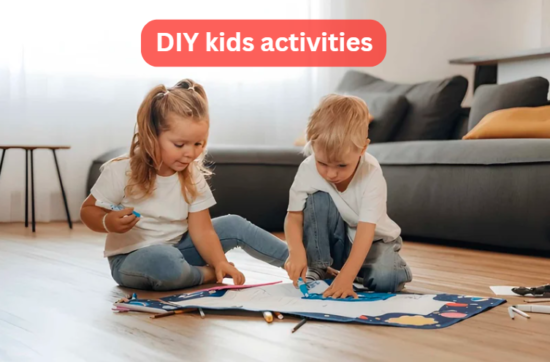
What makes DIY kids activities useful is not just keeping children busy.As they play, toddlers naturally begin to think, construct, and imagine things.There is no pressure and no strict rules, just simple ideas that turn into something meaningful.
This article contains simple suggestions that can be incorporated into everyday living.Nothing complicated, nothing forced. Just practical things you can try anytime.
Let’s get into it.
1. Paper Plate Animals DIY kids activities
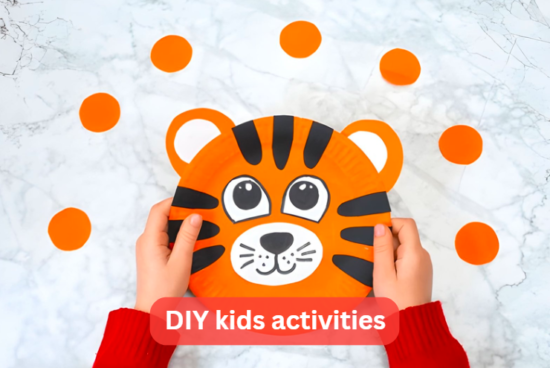
Paper plates are one of the easiest starting points for DIY kids activities.
You give kids a plate, some colors, glue, and scissors, and they usually take over from there. While one child might make a lion, another might transform it into something entirely different. There is no fixed result.
This is what makes DIY kids activities like this so effective. Kids are not following instructions step by step. They are making decisions on their own, even if they do not realize it.
It also helps improve small hand movements. Cutting, sticking, and coloring all build coordination over time.
If you step back and let them lead, the activity becomes more meaningful for them.
2. Homemade Playdough DIY kids activities
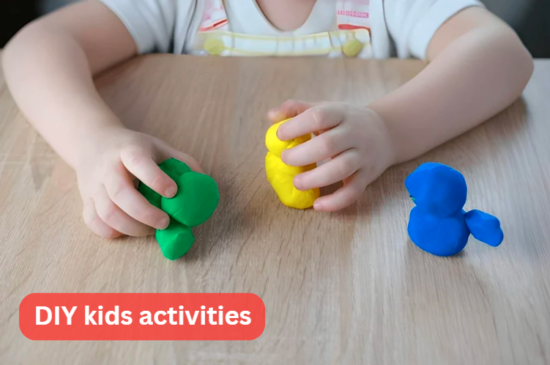
Homemade playdough is one of those DIY sensory activities that just works without much effort. It is quick to make and you don’t really need anything special. Flour, salt, water, and a bit of color if you want it. That’s enough.
Once it’s mixed, kids usually don’t wait for instructions. They just jump in and start playing with it. Some roll it into long pieces, some squash it flat, and some just keep rebuilding it over and over again. It changes every few minutes depending on what they feel like doing.
What makes this activity useful is that kids stay focused without being told to focus. Their hands stay busy, and that alone keeps them settled for a while. It doesn’t feel like a “task” to them. It just feels like play.
It also helps in a quiet way. All that squeezing and shaping builds strength in their fingers and hands. That later helps with holding things better, but kids don’t think about that at all.
Another thing parents notice is how it slows kids down a bit. Even very active kids tend to sit longer when they’re playing with it. It gives them something simple to do that doesn’t need too much thinking.
And if they get bored, you don’t need to stop everything. Just changing the color or giving them something small like a spoon, cup, or cookie cutter usually brings interest back. Sometimes that small change is enough.
That’s why this stays one of the easiest creative DIY activities for kids to use anytime.
3. Treasure Hunt at Home
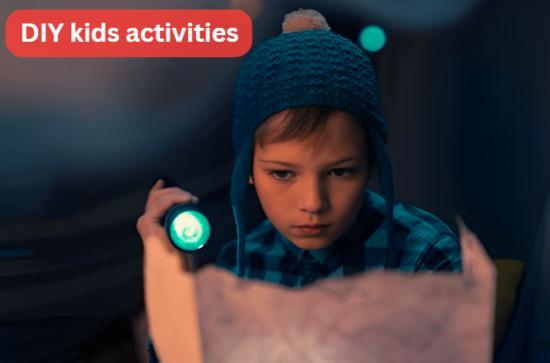
Kids naturally enjoy searching for things, so a treasure hunt fits perfectly.You hide small items around the house and give simple clues. That is enough to turn it into a full activity.
This type of DIY home games keeps both mind and body active. Kids move around, think, and try to figure things out step by step.
You can make it easy for younger kids or slightly challenging for older ones.
Some families turn it into a small game linked with Contest for kids style fun when siblings are involved, which makes it even more exciting without needing rewards.
4. Popsicle Stick Crafts
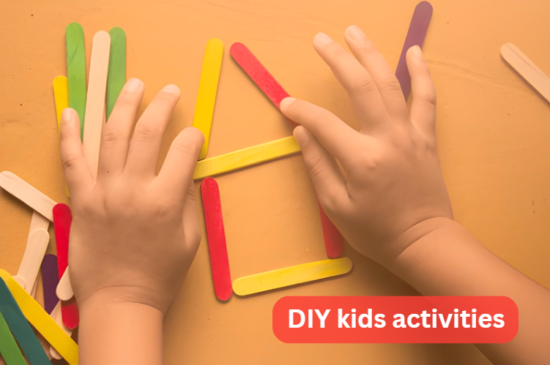
Popsicle sticks are simple but very useful for creative building.Kids glue them together to make shapes, small houses, or random structures.
At first, things may fall apart, but that is part of the learning process. They adjust, fix, and try again.
This is one of those DIY craft projects that teaches patience without saying it directly.It also helps kids understand how small pieces connect to form something bigger.
Once done, they often decorate it to make it feel complete.
5. Sock Puppets
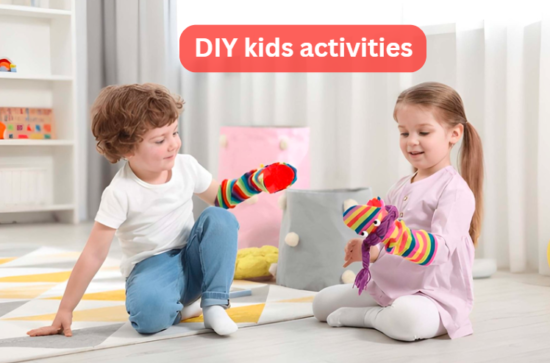
Old socks can turn into something completely different in kids’ hands.Add a few simple items like buttons or markers and suddenly it becomes a character.But the real fun starts after that.
Kids start speaking through the puppet, creating voices, and building stories.
This is one of the most natural DIY creative play because imagination takes over without effort.
It also supports communication skills, especially for kids who are usually quiet.
In many homes, parents also notice how this connects with ideas similar to Creative play for kids where imagination becomes the main focus instead of rules.
6. Make Your Own Coloring Book
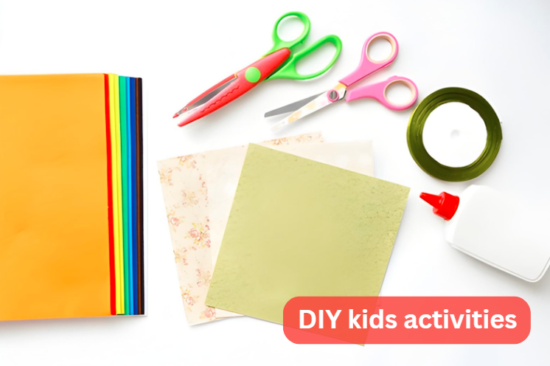
Instead of buying coloring books, kids can easily make their own.Just staple a few blank pages together and let them draw inside.
This is a calm and simple form of DIY art projects that works well when things need to slow down a bit.
Kids can draw anything they want without pressure. Shapes, stories, or random ideas all work.
You can also guide younger kids by giving them simple outlines to start with.
It gives them ownership because they created the book themselves, not just filled it.
7. Nature Collage
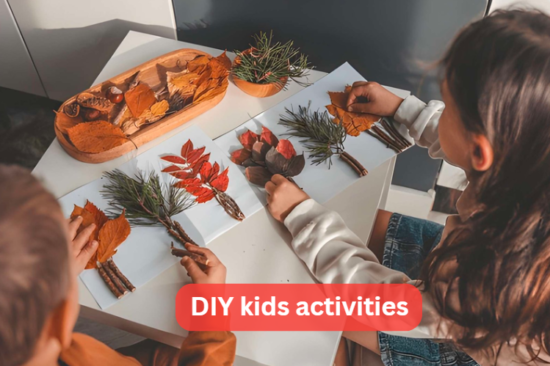
Take kids outside for a short walk and let them collect small things like leaves, flowers, or twigs.
Bring everything back and stick it onto paper.This is one of those DIY outdoor activities that connects outdoor time with creativity.
It also helps kids notice small details in nature they usually ignore.
This kind of activity links well with Outdoor play ideas because it combines movement and creativity in a simple way.
There is no right or wrong arrangement. Kids just place things where they feel like.
8. Balloon Volleyball
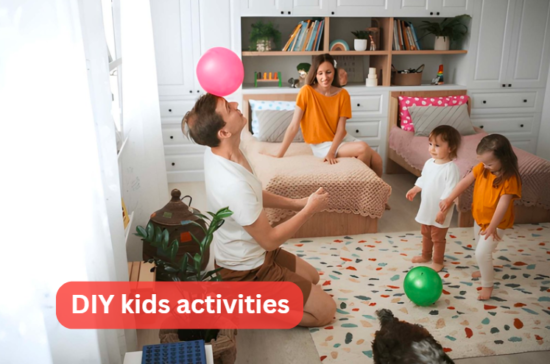
This activity is simple but very effective for energy release.Blow up a balloon and use a line made of tape or string. Then kids hit it back and forth.
It keeps them active without needing much space or setup.This is one of the easiest DIY indoor activities for indoor movement.
It usually leads to laughter because balloons move unpredictably and kids miss often, which makes it more fun.
It can be repeated anytime without changing anything.
9. DIY Obstacle Course
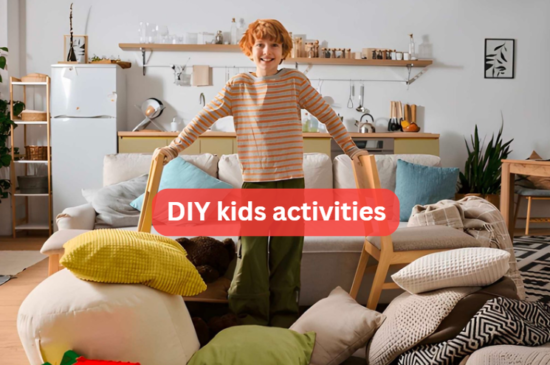
This turns your home into a small activity space.Use cushions, chairs, or boxes to create a path for kids to move through.
They crawl, jump, and climb depending on how you set it up.This type of DIY physical play helps release energy in a controlled way.
It also improves coordination and balance naturally.
Kids often start changing the course themselves, making it harder or more interesting.
It connects well with ideas like Family giveaway events when used in group play situations, making it more engaging for multiple kids.
10. Simple Science Experiment
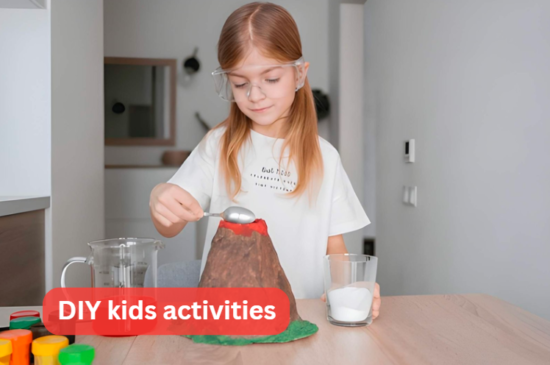
Mixing baking soda and vinegar creates a reaction that kids always enjoy.It fizzes and bubbles instantly, which feels exciting every time.
This is one of the most popular DIY learning activities because it feels like a small experiment but is very easy to do.
Kids see cause and effect clearly without needing explanation.
Some parents find similar ideas or explore resources such as the map guide lwmfmaps for more simple activity inspiration.
It is easy to repeat and never really loses interest.
Conclusion
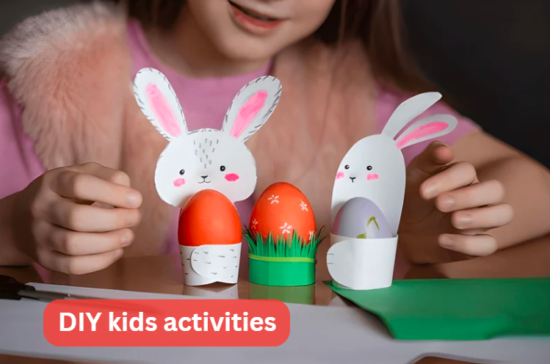
DIY kids activities are not about perfection or complicated planning. They work because they are simple enough to actually use in daily life.
Kids do not need constant entertainment. They need small ideas that let them explore, create, and move at their own pace.
When you use DIY craft activities regularly, you start noticing small changes.You start to notice little changes when kids get these kinds of activities. They focus a bit longer, come up with silly or clever ideas on their own, and aren’t constantly asking for a tablet or phone. Some activities only last a few minutes, and that’s fine. Others might keep them busy for half an hour or more, and sometimes what you started as one thing just turns into a completely new game they invented themselves. That’s totally normal.
The key is to step back and let them figure things out. If you hover too much, it takes the fun away. Kids need space to make mistakes, to experiment, and even to get a little messy. Over time, these small bursts of creativity and focus add up more than you’d think. Days later, you’ll notice they’re thinking differently, solving little problems on their own, and even coming up with their own ideas for play.