
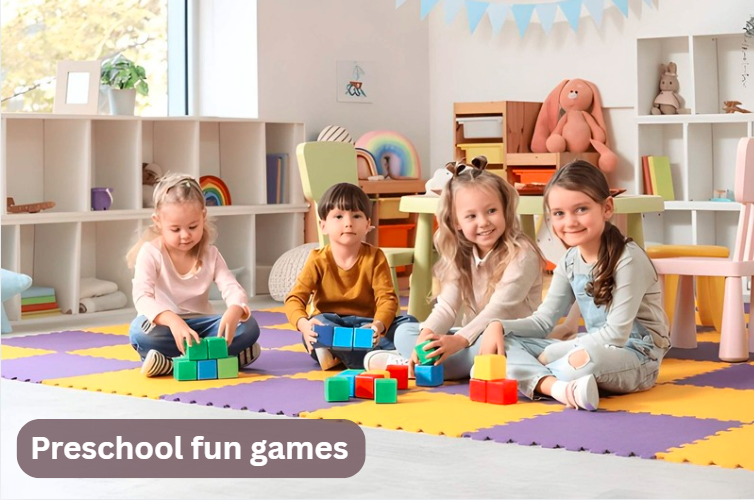
If you have a child between 2 and 5, you already know how quickly these years move. They are stacking blocks for a week. The next, they are questioning “why” everything they see.Preschool fun games are one of the simplest ways to support that growth without turning playtime into a lesson. This guide covers 10 games that actually work for building social skills, cognitive development, and physical coordination in young children.No costly materials are required. All you need to do is be willing to spend time on the floor with them.
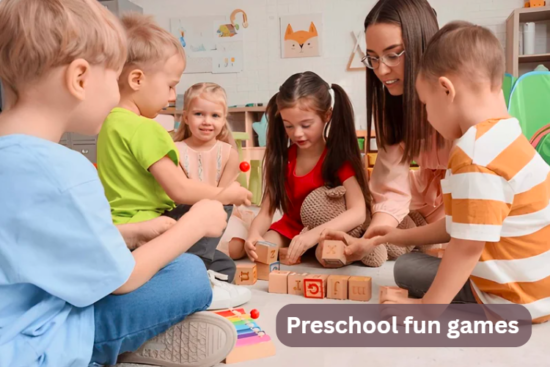
Why Preschool Fun Games Matter
Most parents think of games as something that fills time. But research tells a different story. A study published in Frontiers in Psychology found that structured play programs for children aged 3 to 5 improved working memory, communication, and problem-solving skills. The American Academy of Pediatrics states that play is so essential to healthy development that it should be treated as a right for every child.
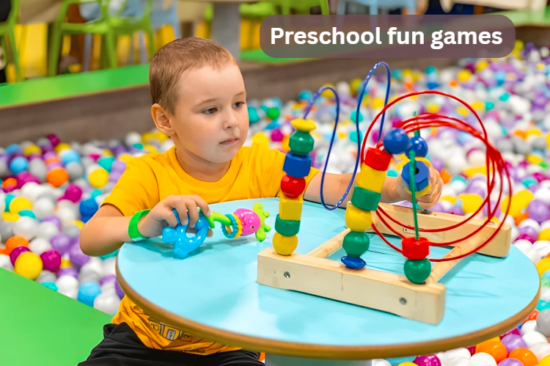
Games that feel simple are asking a lot of a young brain. A child playing Musical Chairs is processing audio cues, managing their body in space, handling emotional tension, and reading social signals from other kids all at once. That kind of mental workout, done through learning through play, is far more effective for this age group than flashcards or screens.
10 Preschool Fun Games Worth Playing This Week
1. Musical Chairs
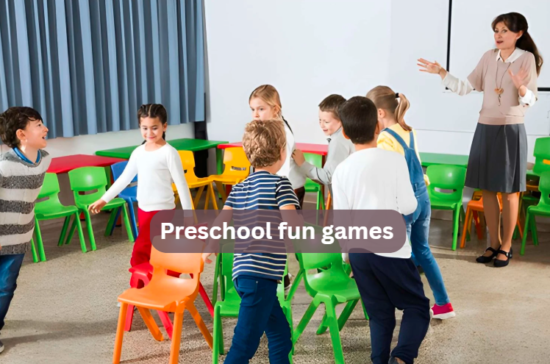
Set up one fewer chair than children. Let everyone move around while the music is playing. Everyone takes a seat after the music ends.The child without a seat joins the cheering section. This game builds active listening, spatial awareness, and a first real lesson in handling disappointment. It is a simple example of learning through play children pick up emotional and social skills without ever feeling like they are being taught. You can remove the elimination element entirely for younger children and simply stop and sit whenever the music pauses.
2. Duck, Duck, Goose
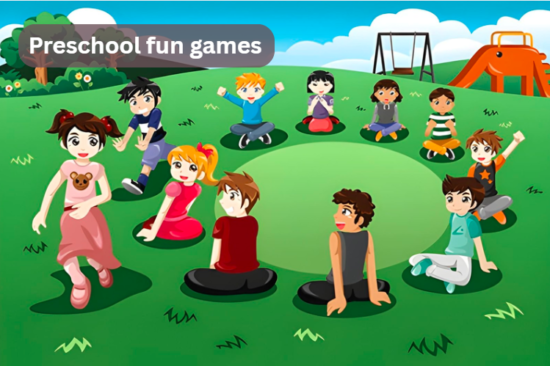
Kids are seated in a circle. A child taps heads and says “duck” until they select a person and say “goose.” That child jumps up and gives chase. This teaches anticipation, body control, and social awareness. For very young children, skip the chase and enjoy the tapping rhythm of the circle instead.
3. I Spy
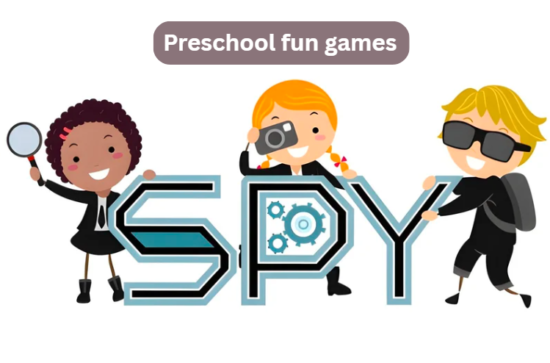
One person picks a visible object and gives a clue. “I spy something that is red.” Everyone looks around and guesses. These interactive games for children need zero materials and work anywhere. Start with color clues. Move to shapes, then size, then function as children grow. The game stays fresh because the clues can always get a little harder.
4. Color Sorting
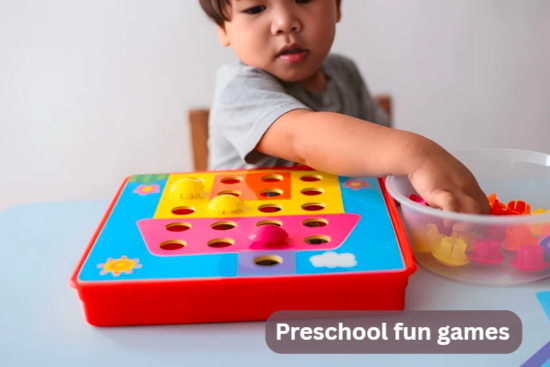
Gather colored bowls and a pile of mixed objects blocks, pom-poms, crayons, or buttons. Ask your child to sort them by color. This builds classification thinking, fine motor control, and focus. Spread the objects around the room and have children carry items one at a time to add movement. Many children find the sorting process genuinely satisfying.
5. Freeze Dance
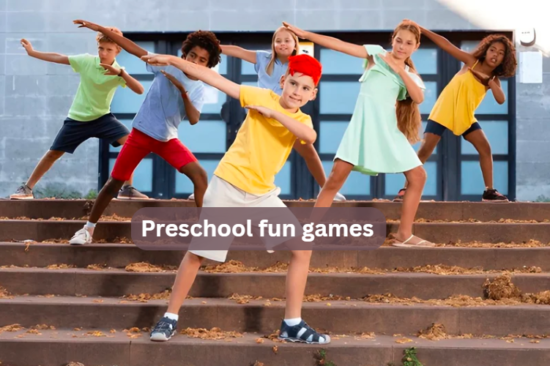
Play music. Everyone dances. When the music stops, everyone freezes. Hold it for a few seconds, then start again. Stopping a moving body on command is real impulse control work. Research from the Building Brains and Futures program found that stop-and-go movement games improved executive function in children aged 3 to 5. And there are no losers, which keeps the energy positive throughout.
6. Nature Scavenger Hunt
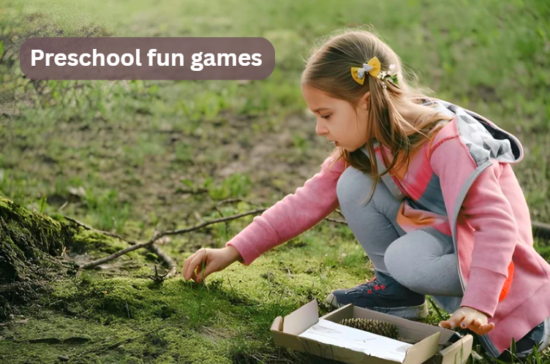
Give each child a picture list of things to find outside a leaf, a rock, a flower, a feather, a stick. Let them search at their own pace. Children are reading visual cues, building vocabulary, and problem-solving as they go. For craft activities that pair well with outdoor play, how to make playful activities lwmfcrafts has some good hands-on ideas worth exploring.
7. Animal Charades
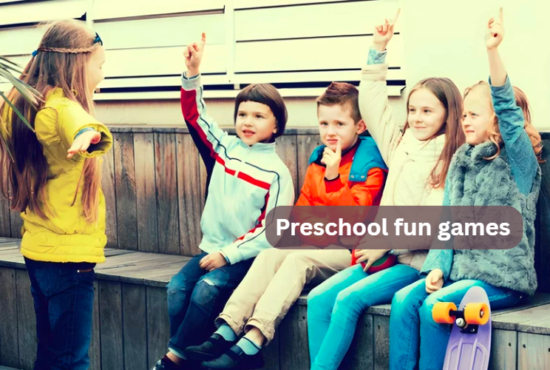
One child acts out an animal with no speaking allowed. Others guess. Waddle like a penguin. Stomp like an elephant. Hop like a frog. This builds body awareness, nonverbal communication, and imaginative play. Research links strong imaginative play to better language development over time. When a child commits to being an animal, they are doing something cognitively rich and loving every second of it.
8. Giant Bubble Play
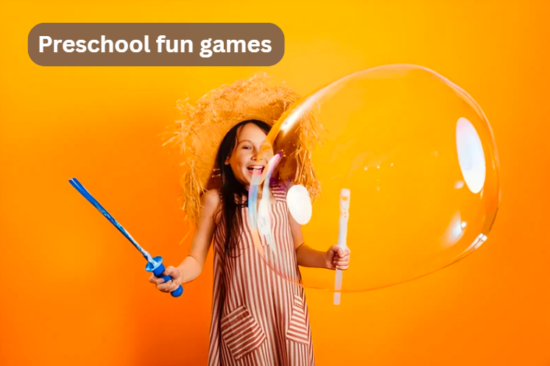
Mix water, dish soap, and a small amount of glycerin. Dip a large wand and wave it slowly to create giant bubbles. Children track moving objects, practice breath control, and experience real sensory delight. Bubbles teach gentle movement without any adult instruction. Rushing pops them immediately. Children figure that out fast. This is preschool fun games at its most natural and most calming.
9. Head, Shoulders, Knees and Toes
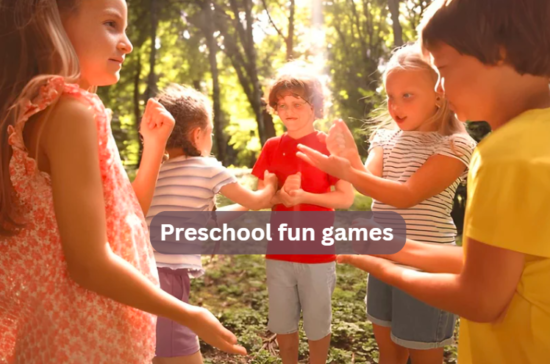
Sing the song and touch each body part as it is named. Speed up with every round. It teaches body part vocabulary, builds coordination, and works as a reset between activities. Speech therapists often recommend it for children with language delays because repetition in context builds word connections fast. For educational toy giveaways that support songs like this, community sharing groups are a practical low-cost option.
10. Shape Puzzle Race
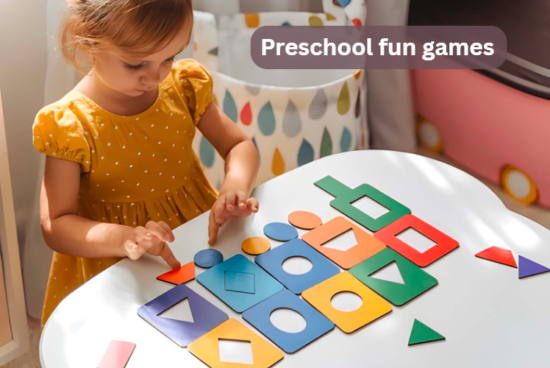
Set out a chunky puzzle and use a small sand timer.Give your kids the task of finishing as much as they can before the sand runs out. Puzzles build spatial reasoning, problem-solving, and persistence. The timer adds a friendly goal without real pressure.
How to Make Preschool Fun Games Work at Home
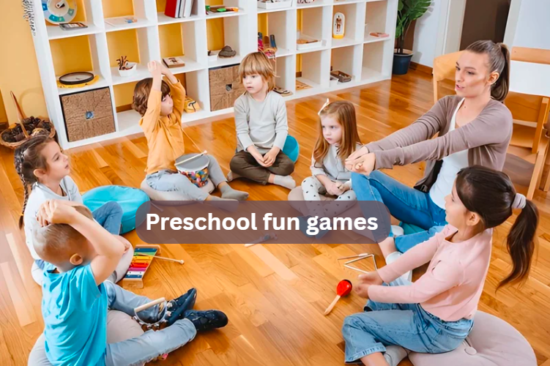
Keep a short rotation of three to four games your child already knows. Familiar games go faster and spark more genuine engagement because children feel confident. New games can be added gradually, maybe once a week.
Preschoolers thrive on routine, and a consistent play window becomes something they look forward to. It also makes transitions easier children are less likely to resist stopping when they trust the game will be there again tomorrow.
Take a cue from your child. Allow them to play Freeze Dance seven times in a row.Repetition at this age is mastery in progress. These preschool fun games work best when they feel like play, not scheduled learning. Keep that spirit and everything else follows. For more guidance, play-based learning resources from early childhood researchers are worth reading.
Look what momfound give away pages and community toy swap groups are also a practical way to keep game materials rotating without spending much. Variety helps, but consistency is what actually moves the needle.
Final Thoughts
These preschool fun games are not complicated. They do not need a big budget or a special setup. What they need is your presence. A willing adult, a little space, and 20 minutes is enough to give a child something genuinely valuable.
Every game on this list has been around for a reason. Children keep asking to play them because they feel good to play. And while they are having fun, their brains are building pathways for language, memory, self-control, and social connection that will serve them for years.
Making a difference here doesn’t require you to be an expert in child development. All you have to do is show up, act a little foolish, and have fun. The milestones take care of themselves.
Put the phone down. Pick a game. See what happens.