
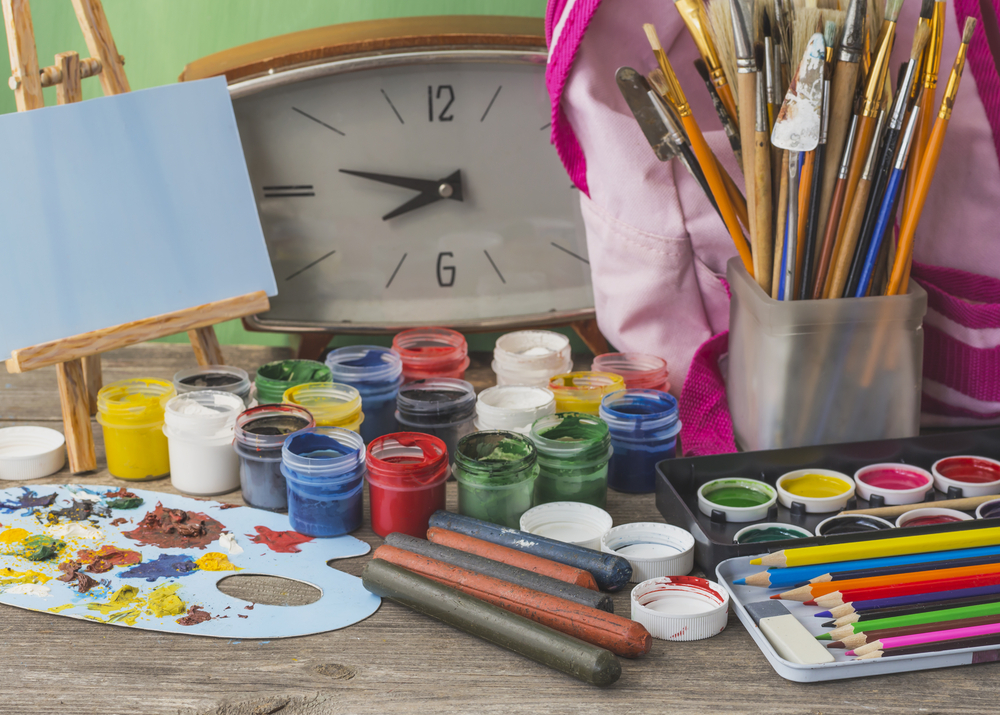
Most advice on kids’ art supplies is really a shopping list for big boxes of everything. A better question is which few supplies earn their place at each stage, because a child who is given fifty items often uses three. If you are asking which art supplies are best for young artists, the strongest answer is a ladder: start with a small set of safe, easy-to-use basics, then upgrade the one thing holding the child back, which is very often the paper.
Safety comes before any brand or price. A Texas art supplier’s purchase guide states it plainly: the ACMI AP seal means non-toxic and safe for all ages, and it advises looking for it on everything for kids under six. The same guide explains that ACMI’s CL label means cautionary labeling, fine for older children who follow directions but in need of supervision.
I have seen children light up when handed a thicker paper and a few good colored pencils, and shut down in front of a giant kit of dried-out markers.
This article is general information, not educational or safety advice. It covers a quick answer, a starter kit by stage, a paper guide, safety labels, an upgrade path, what to skip, and a short FAQ.
Which art supplies are best for young artists?
The best art supplies for young artists are safe, simple, and matched to their stage: chunky crayons and washable markers for beginners, colored pencils and watercolors for school-age kids, and heavier paper once they start painting. Look for the ACMI AP seal and ASTM D-4236 label, and upgrade the paper and pencils before buying more colors.
What belongs in a starter kit?
| Stage | Core supplies | Why |
|---|---|---|
| Toddlers and preschoolers | Large crayons, washable markers, finger or tempera paint, play dough | Easy to grip, easy to clean |
| Early elementary | Colored pencils, crayons, washable markers, construction paper, glue stick, safety scissors | Builds drawing control and cutting skills |
| Older elementary | Sketch pencils, a kneaded eraser, watercolor paper, brushes, and oil pastels | A move to blending and shading |
| Middle school and up | Sketchbook, higher-quality colored pencils, gel pens, acrylic paint pens, heavy art journal | Room to experiment |
School supply lists often scale from regular crayons and washable markers in the early years to sketching pencils, oil pastels, and a heavy-duty 140-lb art journal in the later years.
Why does paper matter so much?
| Paper | Guidance |
|---|---|
| Watercolor paper | Use at least 140 lb. weight, since anything thinner will quickly warp when water is added |
| Cold-press texture | More forgiving for student artists because paint takes longer to dry |
| Size for little hands | Pre-cut sheets around 6 by 9 inches fit art trays and small hands |
| Construction paper | Heavy-weight versions are recommended for school use |
| Sketchbooks | Spiral-bound journals lay flat |
Thin paper is the most common reason good paint looks bad.
Which safety labels should you look for?
| Label | Meaning |
|---|---|
| ACMI AP seal | Non-toxic and safe for all ages, and a label to look for on everything for kids under 6 |
| ACMI CL label | Cautionary labeling, safe with proper use, and fine for older kids who follow directions with supervision |
| ASTM D-4236 | Ensures that any potential chronic hazards are clearly labeled |
| Small parts | Mini markers or small caps can present choking hazards for children under three |
Any paint with an AP seal has been evaluated by a toxicologist. Labels apply to the product in the package, so read each item.
When should you upgrade?
| Sign | Upgrade |
|---|---|
| Paint warps or bleeds through | Heavier paper |
| Colors look faint | Better pencils or paints |
| Child asks to blend or shade | Student-grade pencils and a kneaded eraser |
| Drawings get bigger and bolder | Larger pads or an easel |
| Child sticks with one medium | Add one new medium, not five |
Student-grade supplies are usually enough. Artist-grade sets can wait until the interest is clear.
What can you skip?
| Item | Why |
|---|---|
| Giant 150-piece kits | Many pieces go unused |
| Dried-out or very short pencils | Frustrating to use |
| Adult solvent-based supplies | Need ventilation and supervision |
| Powdery or dusty materials for young children | Easy to inhale or spread |
| Decorative cases | Cost more, add nothing |
What mistakes should you avoid?
- Skipping the label. Check the AP seal and age on the box.
- Buying the cheapest paper. It limits results.
- Giving too many supplies at once. Choose a few.
- Correcting the child’s work. Praise effort.
Frequently asked questions
What is the best first art supply?
Chunky crayons and paper, for beginners.
Do kids need expensive supplies?
Not at first. Good paper helps more than expensive pencils.
Are washable markers worth it?
Usually for young children. Check the label and test on a small area.
Bottom line
Start small and safe, check the AP seal and ASTM label, and upgrade the paper first. Add one new medium at a time, and let the child’s interest guide the next purchase.
for more information visit https://lookwhatmomfound.info/