
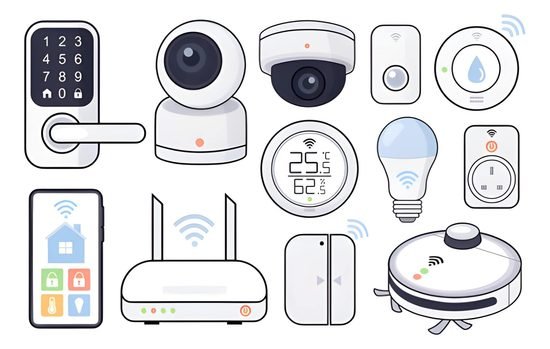
Modern family life can feel like a constant list of small tasks. Turning lights on and off, adjusting the air conditioning, checking whether doors are locked and making sure the house is secure are all simple things, but they add up over time.
Smart home automation can take some of these repetitive tasks off your hands. Instead of controlling every device individually, homeowners can create routines that allow different parts of the home to work together automatically.
For busy families, the biggest benefit of a smart home isn’t necessarily having the latest technology. It’s having a home that quietly makes everyday routines easier.
Make Everyday Lighting More Convenient
Lighting is one of the easiest places to start with home automation.
Instead of walking around the house switching lights on and off, automated lighting can respond to different situations throughout the day.
For example, a family could set up routines such as:
- Turning on selected lights when someone arrives home
- Switching off downstairs lights at bedtime
- Automatically turning on softer lighting in the evening
- Creating a “Good Morning” routine that gradually turns on bedroom and living area lights
- Switching off unnecessary lights when everyone leaves
This can be particularly useful in larger homes where several rooms may need to be managed at once.
More importantly, automation means family members don’t always have to remember every small task.
Keep The Home Comfortable Without Constant Adjustments
Air conditioning and other climate controls can also be incorporated into a smart home system.
Rather than manually adjusting the temperature throughout the day, homeowners can create schedules based on their normal routines.
For example, air conditioning could be programmed to operate around the family’s usual sleeping hours or switch off when everyone leaves the house.
The goal isn’t simply to automate everything. It’s to make the home respond more naturally to how the family actually uses it.
Improve Home Security When Everyone Is Busy
Security is another area where automation can provide useful everyday convenience.
A smart home system can bring different security-related devices together rather than requiring homeowners to check each one separately.
Depending on the system installed, this could include smart locks, sensors, cameras, lighting and other connected devices.
A family could create an “Away” routine that checks selected devices when everyone leaves the house. Similarly, an evening routine could help prepare the home for bedtime.
This can provide an additional layer of convenience without requiring homeowners to constantly monitor individual devices.
Create Routines Around Family Life
One of the most useful features of smart home automation is the ability to create scenes or routines.
Instead of thinking about individual devices, homeowners can think about what they are doing.
For example:
Leaving Home
A single command or automated trigger could:
- Switch off selected lights
- Adjust the air conditioning
- Check selected doors or windows
- Activate security-related settings
Coming Home
A “Welcome Home” routine could:
- Turn on selected lights
- Set the preferred temperature
- Adjust other connected devices
- Create a more comfortable environment when the family arrives
Bedtime
A bedtime routine could:
- Turn off lights throughout the home
- Keep selected night lights on
- Adjust the air conditioning
- Activate appropriate security settings
These routines can reduce the number of small decisions people have to make every day.
Smart Homes Can Be Helpful For Different Family Members
A well-designed smart home shouldn’t only benefit the person who enjoys technology.
It should make sense for everyone living in the house.
Parents may appreciate being able to manage multiple areas quickly. Children can benefit from simple, predictable routines. Older family members may find automated lighting particularly useful at night.
This is why usability is just as important as the number of smart devices installed.
A home filled with complicated gadgets isn’t necessarily a better smart home.
Don’t Forget About Manual Control
Automation should make a home more convenient, not make everyday life unnecessarily complicated.
There will always be situations where someone wants to control something manually. A good system should therefore allow residents to use familiar switches, controls or other interfaces when needed.
This is particularly important in a family home where different people have different levels of comfort with technology.
The best automation is often the technology that works quietly in the background without demanding attention.
Plan The System Around Your Home
One common mistake is buying individual smart devices first and thinking about how they will work together later.
A better approach is to consider the home as a whole.
Think about:
- Which rooms need automation
- Which routines would actually be useful
- Existing electrical systems and devices
- Lighting and air conditioning requirements
- Security needs
- How family members will control the system
- Whether the system can accommodate future additions
This can help prevent a situation where a home ends up with several different apps, hubs and devices that don’t communicate properly.
Why Professional Smart Home Planning Matters
A smart home can involve much more than purchasing smart bulbs or installing a smart speaker.
When several systems need to work together, proper planning becomes increasingly important.
Professional smart home integrators can assess the home, understand how the family uses different spaces and design automation around those habits.
This can also be particularly useful for homeowners who want a more comprehensive system rather than a collection of standalone products.
The objective should be simple: make the technology work for the household, rather than making the household work around the technology.
Best Smart Home Company In Singapore
1. Home-A-Genius
Home-A-Genius focuses on creating integrated smart home systems designed around how homeowners actually use their homes.
Rather than treating smart devices as individual products, a properly integrated system can bring lighting, air conditioning, security and other home functions together into a more cohesive experience.
Best for: Families and homeowners looking for a customised smart home system rather than a collection of disconnected devices.
2. Loxone Singapore
Loxone offers automation solutions designed to bring different building functions together, including lighting, climate and security.
Best for: Homeowners looking for a comprehensive building automation approach.
3. SmartLiving.sg
SmartLiving.sg provides smart home solutions covering areas such as lighting, security and connected home devices.
Best for: Homeowners exploring connected-home technology and smart home upgrades.
Choosing Smart Home Automation For Your Family
There is no need to automate every part of your home immediately.
In fact, starting with the areas that cause the most inconvenience can be a better approach.
If the family constantly forgets to switch off lights, start with lighting. If temperature control is frustrating, consider automating air conditioning. If security checks are a concern, explore smart locks, sensors or related solutions.
Once the basic system is working well, additional automation can be introduced gradually.
This approach can make the transition to a smart home feel much more natural.
Final Thoughts
Smart home automation isn’t really about having more technology in the house.
It’s about making the technology you already use work together in a more useful way.
For busy families, small automated routines can remove repetitive tasks, improve convenience and make the home more responsive to everyday routines. With the right planning, a smart home can become something that quietly supports family life instead of becoming another complicated system to manage.
The best smart home is ultimately one that fits the people living in it. Read more at https://lookwhatmomfound.info/