
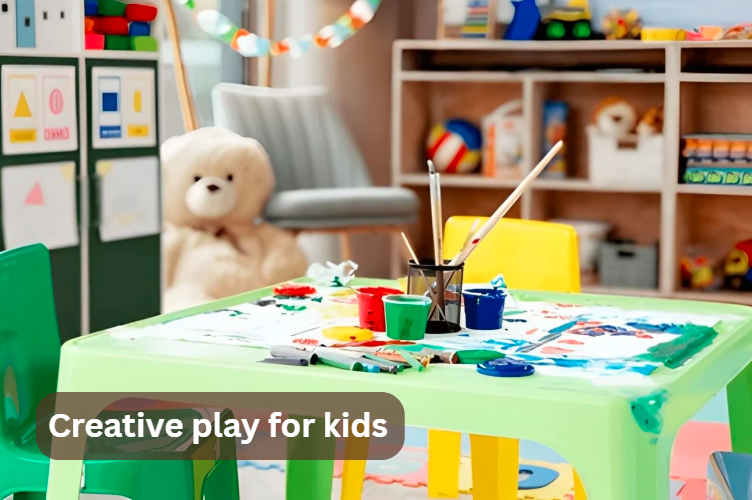
Creative play for kids is something most people don’t really think about while it’s happening. A child picks up a random object, gives it a name, and suddenly it becomes something else completely. A chair turns into a bus. A blanket becomes a cave. A spoon becomes a phone. There is no instruction manual for it. It just happens naturally.
In the United States and many other places, parents often focus on schoolwork, structured learning, and screen time limits. Those things matter, but creative play for kids quietly builds a lot of the skills that later help with school, relationships, and problem solving.
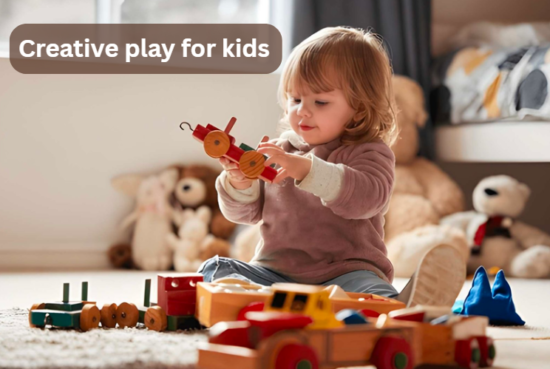
What makes it important is that kids are not being “taught” in a formal way during play. They are discovering things on their own. They are trying ideas, testing reactions, changing rules, and building small worlds that only exist in their imagination.
This article looks at six real benefits of creative activities for kids and their growth. Nothing complicated. Just how it actually works in everyday life and why it matters more than it sometimes gets credit for.
1.Creative Play for Kids Helps Imagination Become a Natural Habit
One of the first things you notice with creative play for kids is how easily children slip into imagination. They don’t force it. They don’t plan it. It just happens when they have space to think freely.
A cardboard box becomes a spaceship without any effort. A pillow becomes a mountain. A toy figure suddenly has a full personality, a voice, a story, and even a problem to solve.
What is happening here is not just fun. The brain is learning to see more than one meaning in the same object. That skill sounds small, but it later helps with flexible thinking.
Children who spend time in creative play usually find it easier to adjust when things change. If something doesn’t work one way, they try another. That habit comes from play where nothing ever has just one correct answer.
It also helps later in school when they are asked to think in different ways instead of memorizing a single method.
2.Emotions Become Easier to Handle Through Creative Play for Kids
Children don’t always know how to explain what they feel. Sometimes even adults struggle with that. So instead, kids act things out during creative play for kids.
You might see a child repeating something that happened earlier in the day. Or changing the outcome of a situation again and again until it feels better to them.
This is not random behavior. It is emotional processing in a natural form.
If something happens at school that upsets a child, it often comes back out in their play later. They’ll replay it with toys or act it out in their own way. Sometimes they even change what happened, almost like they’re trying to fix it so it feels better than it did in real life.
Same thing with happy stuff. If something made them excited or happy, they’ll repeat it again in play just because they want that feeling back.
Over time, this is how kids start figuring out their emotions. Not because someone is teaching it step by step, but because they’re living it through play. They start noticing how things feel, even if they can’t really explain it properly yet.
And honestly, play becomes the place where all of that just comes out naturally instead of building up inside them.
3.Communication grows without pressure
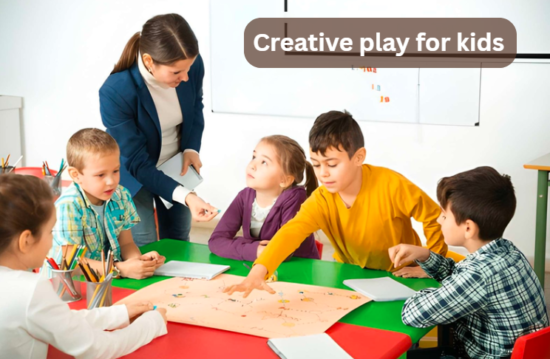
Another big benefit of creative play for is how naturally it builds communication skills.
When children are in pretend play mode, they talk more. A lot more. And it doesn’t feel forced.
A child pretending to run a store will start using phrases like “how can I help you” or “that costs this much.” Another child playing teacher might repeat instructions or ask questions.
They are not thinking about grammar rules or sentence structure. They are just trying to keep the story alive.
That is why it works so well for language development. Words are used in real situations, not memorized from a list.
Even solo play matters here. Many children talk to themselves while playing. They explain what they are doing, argue with imaginary characters, or narrate actions. That self talk is actually part of building thinking and language skills.
When other kids join in, communication becomes even more natural. They respond to each other, adjust ideas, and keep conversations going without planning it.
Creative activities for kids turns communication into something lived, not studied.
4.Social skills develop through real situations
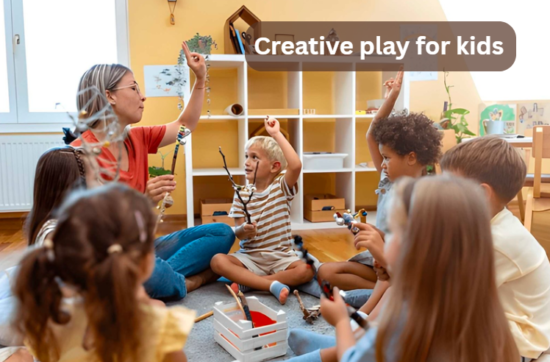
When children play together, things don’t always go smoothly. And that is actually where a lot of learning happens.
Creative play for kids often turns into group decision making without adults stepping in all the time. Kids decide who plays what role, what the rules are, and how the game should go.
Sometimes they agree quickly. Sometimes they don’t.
One child wants to lead. Another wants to change everything. Someone else wants to stop and do something different.
In those moments, children start learning how to deal with other people in real time.
They learn to share control instead of always leading. They learn to wait. They learn to adjust when someone disagrees.
There is no formal lesson happening, but the experience stays with them.
Over time, this helps build social confidence. Kids become more comfortable working in groups because they have already practiced it in play many times before.
5.Problem solving becomes normal thinking
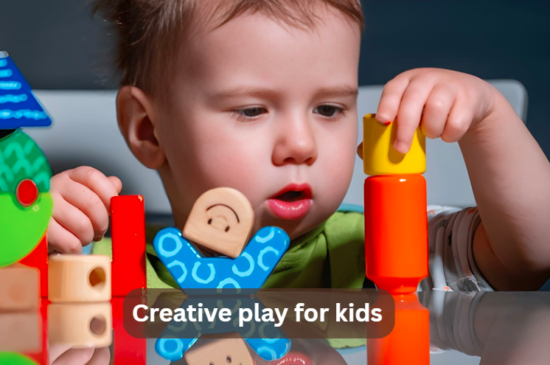
Creative play for young kids is full of small problems that need quick solutions.
A tower falls. A story gets stuck. A game becomes boring. A rule doesn’t make sense anymore.
Instead of stopping, children usually adjust. They don’t think too much about it. They just change something, try a different idea, or reshape the game in a new way and keep going.
This happens even more when kids are outside doing outdoor play ideas .Outdoors, things are always changing. One moment they are playing with sticks, the next they are running around or turning a random space into a game area. They naturally adapt to whatever is around them, and that keeps the play alive without needing anything planned.
They rebuild. They change rules. They try a different idea. They improvise without overthinking it.That habit is important because it builds resilience in a very natural way.
They learn that problems are not something to fear or avoid. They are just part of the process.
For example, if they are building something with blocks and it keeps falling, they don’t always give up. They try again, maybe with a different structure or base.
That kind of thinking becomes useful later in school work and everyday challenges.
Creative play quietly trains the brain to stay active when things don’t go as planned.
6.Confidence grows without being forced
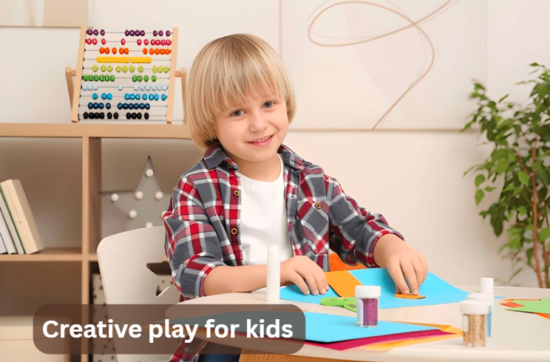
One of the most overlooked parts of kid’s creative play is confidence.It doesn’t come from praise or rewards. It comes from doing something on their own and seeing it work, even in a small way.
Kids don’t think about it much when they make up a game or build something. They just do it. But it feels good because it’s something they came up with on their own. No one showed them how. They just tried and figured it out. Even if it doesn’t turn out perfect or they move on quickly, it still gives them a bit of confidence. After some time, they stop hesitating so much and just try things, because they’re used to figuring stuff out on their own.
That is how independence starts forming quietly in early childhood.
Everyday environment shapes creative play
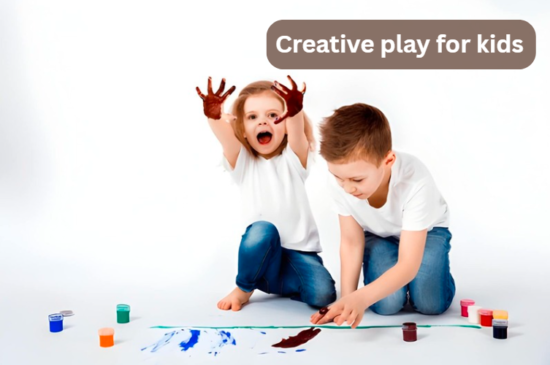
Creative play for children doesn’t depend on special tools or expensive toys. Even simple indoor kids activities can be enough to keep them engaged. In fact, it’s often the simplest spaces that lead to the most creativity.
A living room, backyard, or even a small corner in a classroom is often enough. Kids don’t really need much more than that. They take whatever is around them and turn it into something else without even thinking about it.
Sometimes parents do look around for new ideas or little extras, and that’s where things like giveaways come up. But even then, the interesting part is that kids usually don’t care where something came from or how special it is. Kids don’t really follow a plan—they just grab whatever’s around and start having fun with it.
Sometimes parents throw in a few ideas, like something to do inside or a game to play outside, especially when the kids are restless or bored. It doesn’t always stick, but it can help get things started.
Some families also come across things like educational toy giveaways or fun activity giveaways when they are looking for new ideas. Even online spaces sometimes share random inspiration, like fathead wall graphic giveaway or giveaways.
But most of the time, kids don’t really need much of that. If you leave them with a few simple things, they usually figure it out on their own. A box, a toy, or even random objects around the house can turn into a full game or story.
That is really the main idea behind creative play for kids. It doesn’t depend on planning. It just happens when children are free enough to use their imagination.
Final thought
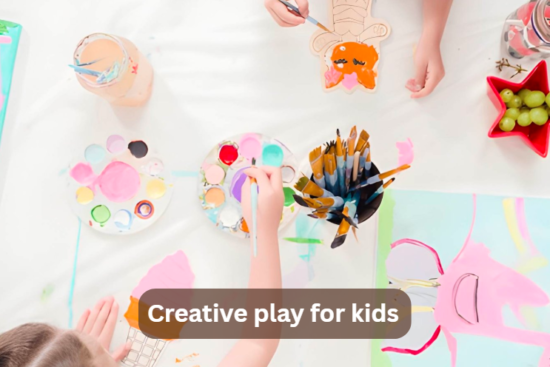
Creative play for children is not just something to fill time. It is a big part of how children grow and learn without even realizing it.
They learn how to think, how to talk, how to handle feelings, how to deal with other people, and how to solve small problems in their own way.
Most of it doesn’t look serious from the outside. It just looks like play.
But a lot is happening underneath it.
And when children are given the space to do it freely, they are actually building skills that stay with them for a long time.