
Most people think of hearing as something that lives in the ears and stays there. But hearing is tied into your brain, your circulation, your balance system, your stress levels, and even how connected you feel to other people. That is why changes in hearing can be an early nudge to look at your overall health, not only your volume settings.
If you have ever wondered whether it is worth booking a hearing check when life feels busy, think of it as part of routine health care, just like vision checks or dental cleanings. And if you are already working on your health goals, building in better hearing support services
early can make those efforts easier to stick with, because communication, sleep, and confidence all improve when sound is clearer.
Hearing loss is common, but it is not “just aging”
In Canada, hearing disability is not rare. A national release from Statistics Canada reported that in 2022, 5.6% of Canadians aged 15 and over, more than 1.6 million people, had a hearing disability, and the rate climbed sharply with age, reaching 13.6% among those 65 and over.
That is only part of the picture, because many people have measurable hearing loss or tinnitus long before they describe it as a disability. The bigger point is this: hearing changes are widespread, and they often build slowly enough that you adapt without realizing what you are missing. You start reading lips more. You turn on captions. You avoid the loud restaurant, not because you hate the vibe, but because you hate the strain.
The “health care” reasons to take hearing seriously
Hearing care is not vanity care. It supports day to day functioning and can influence other parts of health in ways people do not always expect.
It reduces cognitive load
When your hearing is blurred, your brain works overtime to fill in the gaps. That mental effort can leave you drained after social time, meetings, or family dinners. Many people describe it as “I can hear, I just cannot understand.” That distinction matters. A clinic hearing assessment can help clarify whether the issue is volume, clarity, or specific speech sounds, and what options actually match your needs.
It helps protect social and emotional health
Communication is a health tool. When conversations get hard, people often withdraw in small ways that add up: fewer phone calls, fewer gatherings, fewer spontaneous chats with neighbours. That kind of isolation can affect mood, motivation, and stress. Even small improvements in hearing access can make it easier to stay engaged with the people and routines that keep you well.
It supports workplace safety and energy
Noise exposure is a health care topic, not only an occupational one. The NIOSH recommended exposure limit is 85 dBA averaged over an eight hour workday. If you are around power tools, manufacturing noise, loud fitness classes, or even frequent events, that guideline is worth knowing because risk rises with repeated exposure.
If you regularly need to raise your voice to talk to someone at arm’s length, your ears are likely taking on more sound than they can safely handle over time.
Hearing changes that can be connected to broader health
Not every change in hearing is caused by general health issues, but the overlap is real enough that it is worth paying attention.
Cardiovascular health and circulation
Your inner ear relies on tiny blood vessels. When circulation is compromised, the inner ear can be sensitive to it. If you are managing blood pressure, cholesterol, or heart health, it is reasonable to treat hearing changes as part of the “whole system” conversation with your care team.
Diabetes and metabolic health
Blood sugar control can affect nerves and blood flow. Some people notice gradual hearing shifts alongside other diabetic changes. If you live with diabetes or prediabetes and your hearing feels different than it used to, it is worth mentioning at your appointments and getting a baseline hearing test.
Medications that can affect hearing
Some medications are ototoxic, meaning they can affect hearing or balance in certain situations, especially at high doses or with long-term use. You do not need to panic or stop anything on your own. The practical move is to bring a medication list to your hearing appointment and talk through what you are taking, including over the counter products.
Recurrent ear infections, allergies, and sinus issues
Congestion and inflammation can change how sound travels through the ear, sometimes causing muffled hearing or pressure. If you notice hearing that fluctuates with seasons or colds, a hearing clinic can help determine whether the pattern looks like a conductive issue, a sensorineural issue, or a mix of both, so you are not guessing.
What a hearing clinic visit can do that an online test cannot
Online hearing checks can be a useful nudge, but they are not a diagnosis. In clinic, you get controlled testing, calibrated equipment, and a professional who can connect your results to real life problems.
A thorough appointment can include:
- A case history that considers health conditions, noise exposure, and medications
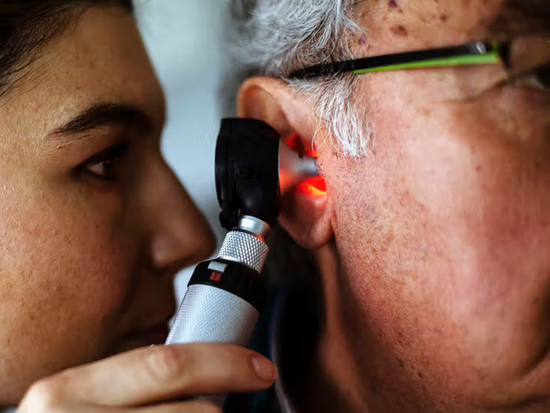
- Ear checks to look for wax blockage or other issues that can affect sound
- Hearing testing that measures both sensitivity and speech understanding
- A discussion of next steps, which might be monitoring, medical referral, hearing technology, or communication strategies
The goal is not to “sell you hearing aids.” The goal is to make your hearing make sense, and give you options that fit your life.
Practical habits that protect hearing in daily life
You do not need to live in silence to protect your hearing. You just need smarter defaults.
- Use the 60/60 idea for headphones: aim for about 60% volume for about 60 minutes, then take a break
- Keep ear protection handy for loud tasks, even brief ones like lawn work or power tools
- Choose quieter seating in restaurants: away from speakers, kitchens, and clattering dish zones
- Turn on captions without shame. They reduce fatigue, not intelligence
- Treat tinnitus and hearing changes as a reason to check in, not a reason to “tough it out”
On a bigger scale, the World Health Organization estimates that by 2050 nearly 2.5 billion people will have some degree of hearing loss, and more than 700 million will require hearing rehabilitation. That future is not just a global headline. It is a reminder that prevention and early support matter now.
When to book a hearing assessment
Consider booking if:
- You miss parts of conversation, especially in groups or noise
- People sound like they mumble, but only sometimes
- You rely on captions more than you used to
- You have ringing, buzzing, or hissing sounds that do not go away
- You feel tired after listening all day
- Family or coworkers comment on the TV volume or repeated “what?” moments
Even if you are not ready for any device or treatment, getting a baseline is powerful. It gives you a reference point and helps you notice changes early, when options are simpler.
Hearing care sits comfortably inside health care because it supports how you live, how you connect, and how you move through your day. If your hearing has been quietly sliding down your priority list, this is your sign to put it back where it belongs: in your regular wellness routine.
Read More at https://lookwhatmomfound.info/