Most foundation problems do not start with dramatic cracks or doors that will not close. They start quietly, with a mismatch between what the ground can realistically support and what the structure is asking it to do. In many parts of Canada, that mismatch is easy to stumble into because soil conditions can change a lot over a short distance, and because our seasons put foundations through constant cycles of moisture change and freeze-thaw movement.
If you are planning a new build, an addition, a porch rebuild, a garage, or even a deck that you want to feel as solid in year ten as it does on day one, it helps to think of the foundation as a load transfer system. Your job is not just to “get below the frost line” or “pour enough concrete.” Your job is to create a predictable path for forces to move from the structure into competent soil without unwanted movement along the way.
That is where engineered helical piling systems fit naturally into modern foundation planning. Used correctly, they are less of a niche option and more of a practical tool for solving the situations where conventional footings become expensive, disruptive, or uncertain.
Foundations Fail in Predictable Ways
When a foundation underperforms, it is usually because one of three things was misunderstood:
1) The soil is not uniform. Fill, soft clay, organic layers, or loose sand can sit above stronger material. A shallow footing might bear on the weakest layer simply because it is the first one encountered.
2) The loads were simplified too much. It is not just vertical weight. Wind uplift, lateral pressures, and unbalanced loads from additions can all affect how the foundation behaves over time.
3) Water was treated as an afterthought. Drainage patterns, high groundwater, downspout discharge, and surface grading can change the effective strength of near-surface soils, especially in clay-heavy areas where moisture swings matter.
The good news is that these problems are avoidable when the foundation choice matches the site realities.
When Traditional Footings Get Complicated
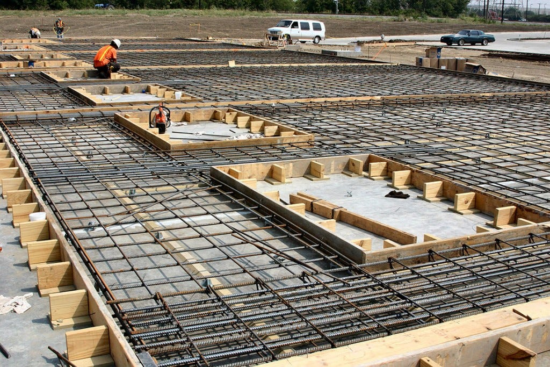
Concrete footings are a proven solution, but they are not automatically the simplest solution. They can become complicated when:
- Access is tight. Side yards, fenced backyards, and existing landscaping can make excavation and formwork difficult.
- You are building close to an existing structure. Digging beside a foundation wall, porch, or slab can risk undermining or damaging what is already there.
- The soil near the surface is unreliable. If competent bearing is deeper than expected, you can end up chasing depth with more excavation, more concrete, and more uncertainty.
- You want to build without waiting on cure times. Poured concrete introduces scheduling constraints that can ripple through the whole project.
Helical piles are not a replacement for every footing. They are an alternative load path when the typical approach starts stacking up tradeoffs.
What Helical Piles Actually Do Differently
A helical pile is a steel shaft with one or more helical plates that advances into the ground by rotation. Think of it as threading into the soil rather than excavating it away. The key difference is not just speed or cleanliness. The key difference is where the structure’s load ends up.
Instead of spreading load at a shallow depth where soils are often most affected by seasonal moisture and frost, helical piles can be advanced until they reach more stable bearing strata. That is a foundational shift in how you manage risk on tricky sites, because you are intentionally bypassing the layers most likely to move.
Just as important, installation provides feedback. Pile performance is not guessed based on what you hope the soil is doing. It is verified through measurable installation resistance, then connected back to the design requirements.
“Engineered” Matters More Than the Hardware
It is easy to get distracted by pile sizes, helix diameters, and steel grades. Those details matter, but the bigger value is in the design process that wraps around them.
An engineered approach typically accounts for:
- Compression, uplift, and lateral demands, not just vertical weight.
- Depth and bearing selection based on soil conditions, not a rule of thumb.
- Connection detailing so the load transfers cleanly from framing or concrete to the pile head.
- Corrosion considerations aligned to local soil and moisture conditions.
- Quality control during installation, including documenting what was achieved in the field.
If you remember one thing, make it this: helical piles are most effective when they are treated as a designed foundation system, not a generic product you buy “by the piece.”
The Overlooked Part: How the Structure Meets the Pile
A foundation can be perfectly installed and still perform poorly if the connection is improvised. This is especially common on additions and exterior structures.
Some connection issues to watch for:
Decks and porches: A strong pile is not helpful if the beam seat is off-level, if posts are not aligned, or if the framing creates point loads that were never part of the plan.
Additions: The interface between the old and new structure is where movement shows up first. If the addition foundation behaves differently than the original foundation, you need a connection strategy that anticipates differential movement rather than pretending it cannot happen.
Slabs and grade beams: If a slab is floating while piles are carrying the primary load, the detailing needs to prevent the slab from becoming unintentionally load-bearing in some areas and not others.
Good design is not only about capacity. It is about building a load path that stays consistent after seasons of real-world movement.
Helical Piles and Water: A Team Sport, Not Two Separate Decisions
Foundation planning is cleaner when you treat piles and moisture control as part of one system.
Even when piles handle the structural load well, water can still create problems around the structure:
- Poor grading can lead to softening near-surface soils and settlement of adjacent features like walkways.
- Concentrated roof runoff can cause erosion, washout, or localized movement.
- Freeze-thaw cycles in wet soils can increase seasonal movement in the top layers, affecting anything that is not founded deep enough or not properly isolated.
The practical takeaway is simple: helical piles reduce structural risk from bad near-surface soils, but they do not replace smart drainage and site grading. Pairing the right foundation approach with sensible water management is how you keep the whole property behaving predictably.
Situations Where Helical Piles Are Often a Better Fit
Without repeating the usual “here are all the benefits” list, there are a few situations where helical piles tend to make the most sense:
Backyard builds with limited access: When getting an excavator in is unrealistic, piles can reduce disruption and keep the site manageable.
Additions beside existing foundations: When you want support without large open excavations near footings and services.
Sites with variable fill or soft layers: When you want to reach competent soil without turning the project into a guessing game.
Projects that cannot pause for concrete cure or weather delays: When scheduling certainty matters as much as the foundation itself.
In other words, helical piles are often chosen not because concrete “does not work,” but because the site conditions make concrete the more complicated path.
A Quick Pre-Start Checklist for Homeowners and Builders
Before you commit to any foundation approach, ask these questions:
- What is the structure actually asking for in terms of loads (including uplift and lateral)?
- Do we know what the soil profile looks like where the foundation will go?
- What is the plan for water, grading, and roof runoff once the project is complete?
- How will the new foundation connect to the structure, and what keeps that connection consistent over time?
- What documentation will confirm the foundation was installed to the design intent?
Foundations are not exciting until they fail. Taking a little time to align design, installation, and site conditions is how you end up with a build that feels boring in the best way possible.
Read More at https://lookwhatmomfound.info/