
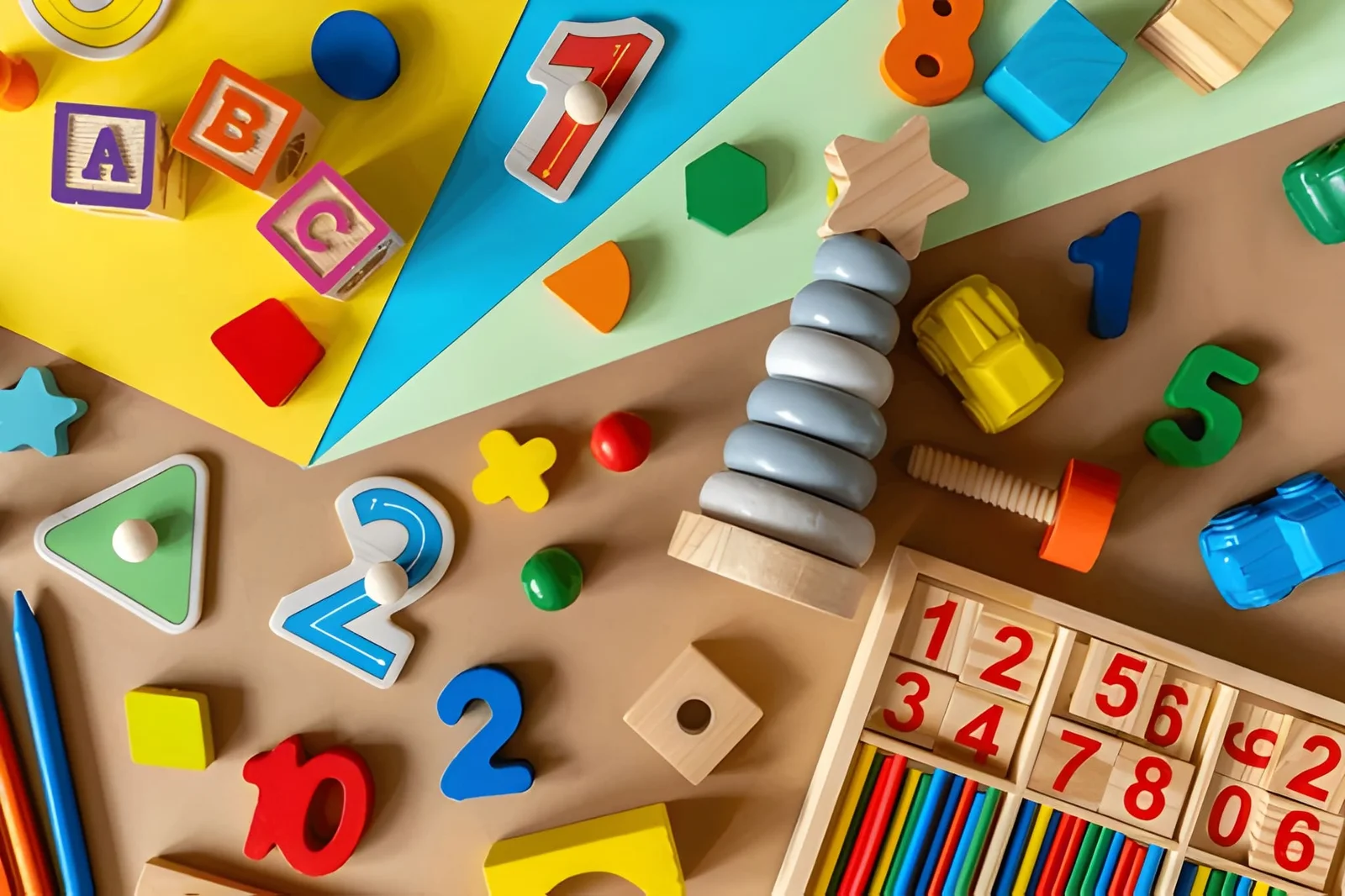
The word “educational” on a toy box is a promise with no inspector behind it. Anyone can print it, and plenty of toys that light up, talk, and sing carry it. If you are wondering what you should look for in educational toys, the best answer is to ignore the label and look at what the toy asks your child to do.
I once watched a baby press the same button on a talking farm toy twenty times, while the parent sat back and waited for the toy to finish. Then the parent picked up a set of plain blocks, and the conversation started on its own. That small scene lines up with what the research keeps finding.
A toy teaches most when it invites a child to think, move, and interact with another person. It teaches least when it does all the work.
This article is general information, not medical or educational advice. It covers a quick answer, a research summary, a checklist table, an age guide, safety notes, mistakes to avoid, and a short FAQ.
What should you look for in educational toys?
Look for toys that match your child’s current skills and stretch them a little, allow more than one way to play, encourage movement or problem-solving, and invite you to play along. Choose sturdy, age-appropriate toys with safety labels. Be cautious about toys that mainly light up, talk, or perform for the child.
What does the research say?
| Finding | Source detail |
|---|---|
| Best toys | The AAP says the best toys match a child’s developmental skills and encourage new skills |
| The “educational” label | Use caution when you see it, since most tablets, games, and apps advertised as educational really are not |
| Electronic vs traditional | A 2016 US study found traditional toys such as wooden puzzles, rubber blocks, and shape sorters may increase language more than electronic toys |
| What was measured | Researchers counted adult words, content words, and parent responses per minute across 26 parent-infant pairs |
| Interaction | The type of toy has a significant impact on the type of interaction that occurs |
| Physical play | Active toys help physical development and can improve self-regulation and peer interaction |
This was a small study of infants aged 10 to 16 months, so it shows a pattern, not a rule for every child.
What is the checklist?
| Question | Good sign | Warning sign |
|---|---|---|
| Does it match my child’s level? | A slight challenge beyond current ability | Too easy or too hard |
| Who is doing the work? | The child | A toy that talks and lights up is doing the playing for the child |
| Can it be used many ways? | Blocks, clay, dress-up | One button, one result |
| Does it invite people to play? | It fosters interactions with caregivers | Plays alone while you watch |
| Will it grow with the child? | Toys that grow with the child | Outgrown in weeks |
| Does it get kids moving? | Balls, push toys, ride-ons | Only sitting and tapping |
Which toys suit which skill?
| Skill | Toy examples |
|---|---|
| Language | Books, puppets, play food, dolls |
| Problem-solving | Puzzles, shape sorters, blocks |
| Fine motor | Stacking cups, lacing cards, chunky crayons |
| Gross motor | Balls, push toys, ride-on toys |
| Imagination | Dress-up, toy kitchen, vehicles |
| Social skills | Simple board games, building together |
The AAP also suggests offering a wide range of toys, including baby dolls, toy vehicles, action figures, and blocks.
What safety checks matter?
| Check | Why |
|---|---|
| Age label | Small parts are a choking risk for children under 3 |
| ASTM certification | Look for ASTM certification to confirm safety standards |
| Battery and magnet safety | Keep button batteries and small magnets away from young children |
| Build quality | Cracks and loose parts can be hazards |
| Recalls | Check your national safety authority’s website |
Government regulations and product testing have made most toys safe when used for the recommended ages.
What mistakes should you avoid?
- Trusting the label. “Educational” is marketing, not a measurement.
- Buying for the future. Toys too advanced cause frustration.
- Letting the toy replace you. Use toys to enhance interactions, not to direct the child’s play
- Buying too many. A few good toys beat a crowded shelf.
Frequently asked questions
Are electronic toys bad?
Not always, but interaction and guidance from you are crucial for learning benefits. Use them in moderation and play along.
What is the best educational toy?
Blocks, books, puzzles, and pretend-play items are common answers because they have many uses.
Do you need expensive toys?
No. Simple toys and household items often work as well.
Bottom line
Look past the label. Choose toys that fit your child’s level, allow many ways to play, get them moving or thinking, and bring you into the game. Check safety, and buy fewer, better toys.
for more information visit https://lookwhatmomfound.info/